Hey, Cohen
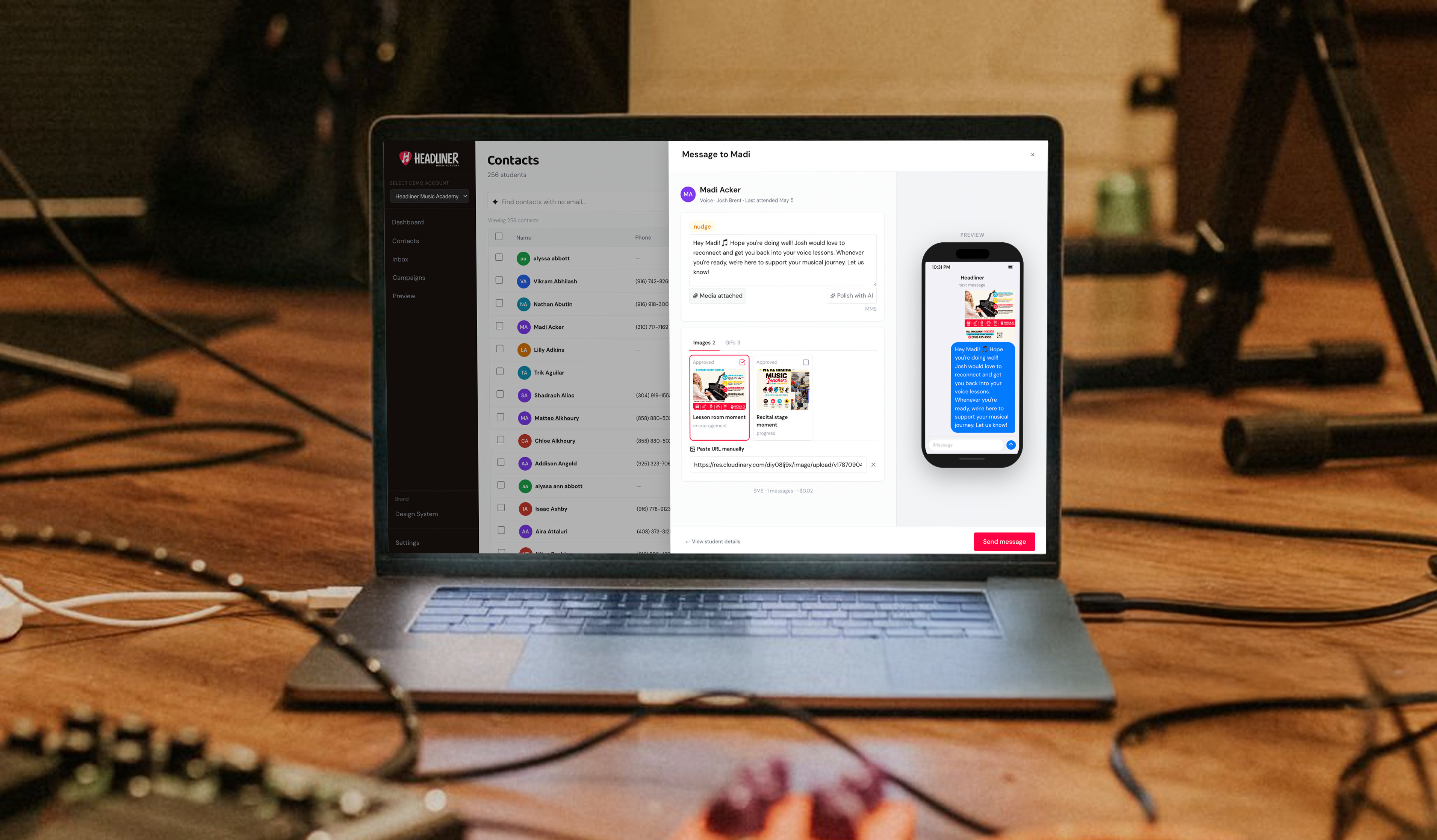
Started as an AI-assisted messaging tool for Headliner Music Academy, then expanded into Odeon with lead management and internal notes. Designed, built, and shipped solo, from paper sketch to a real school's re-enrollment numbers.
Role
Founder · Design + Code
Timeline
2026
Team
Solo

Hey, Cohen is the first product I've taken fully from zero to launch. After years working on complex product teams at Amazon, I took a step back and focused on building something of my own. I designed it, built the systems underneath it, worked through the business model, built the AI layer, and shipped it into a real business. I learned a lot along the way, and it made me a product builder.
It's also the clearest demonstration of how my design practice has evolved. I still care deeply about understanding the problem, shaping the product, and getting the details right. But I'm now designing and building in a much more integrated way, using AI throughout the process and creating intelligent features that feel natural to the people using them.
Headliner is a music academy in Rocklin with around 250 students. Like many enrichment schools, it runs on constant communication with parents and students.
Product name is inspired by Cohen, Headliner's Director and the most familiar face of the school. Hey, Cohen brings together the business context already sitting across the music management software and spreadsheets, including enrollment, billing cadence, attendance, and session notes. It uses AI to surface who's worth reaching out to and why, whether that's a growth opportunity, a promotion, or a retention concern.
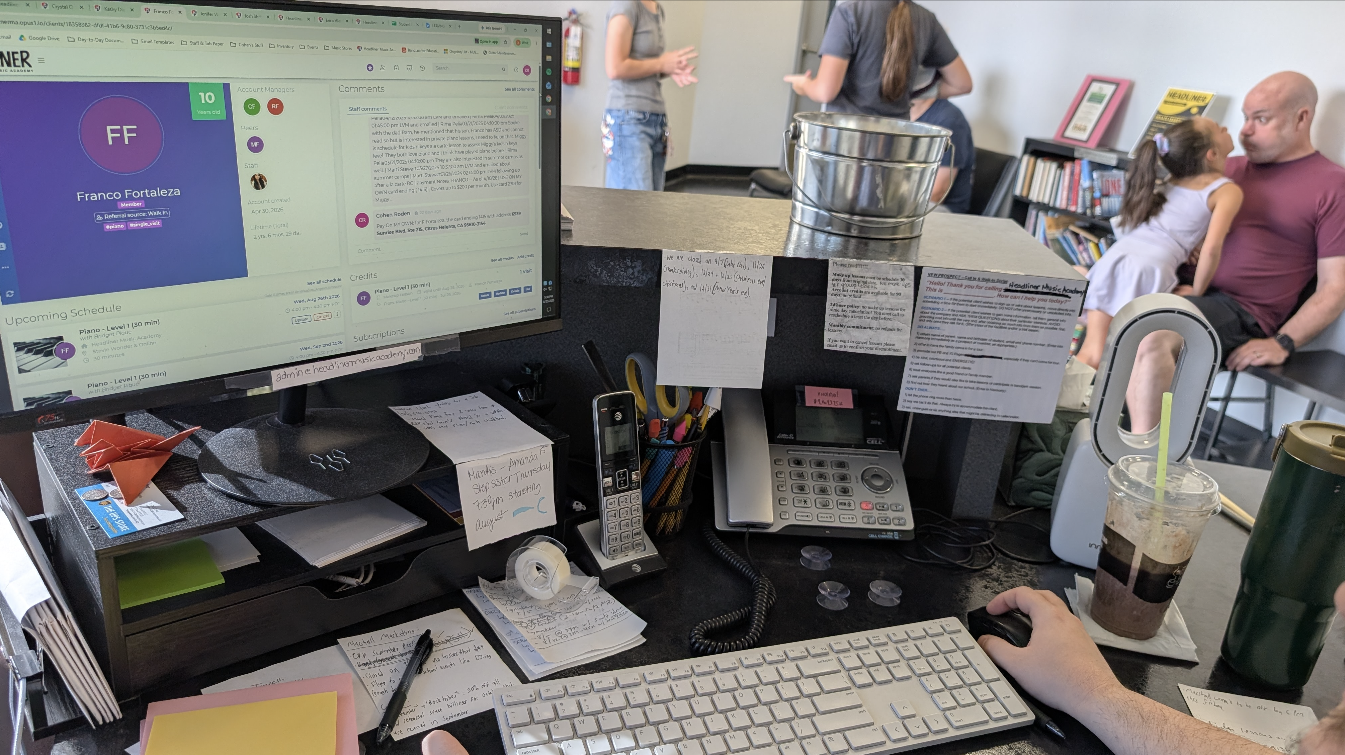
The lobby is where a lot of the real relationship-building happens. Parents wait during lessons, talk to Cohen, and surface the context that keeps the business running.
Lay of the land
- The average class management software costs $400 a month
Headliner pays $298 for Opus1's base subscription and CRM tier, $99 for SMS, and $99 for a more capable email tool.
- Systems don't connect
No APIs, no free integrations, so getting usable data meant exporting spreadsheets and reshaping them by hand.
- Messaging took hours.
A mass email took about an hour. Targeted outreach, like recruiting for a band or promoting a recital, took four to five hours of manual curation.
- There was no texting
Communication happened in person, by individual email, or by phone calls that often went to voicemail. I treated SMS as the MVP wedge. I started with the channel most likely to change behavior quickly: text messaging. That gave Hey, Cohen immediate feedback loops. Parents and students would reply with things like, “Hey, yeah, great timing sending this.” With email, that learning loop would have been slower, bumpier, and easier to miss.
Process
The idea started on paper, sketching the core flows by hand before any code. From there I moved into VS Code to prototype the workflows, connected them to real Headliner data in Supabase, and iterated on the data model until it held. Then I moved into Figma to polish the interface and define a real design system, followed by continuous iteration until every flow held up and shipped.
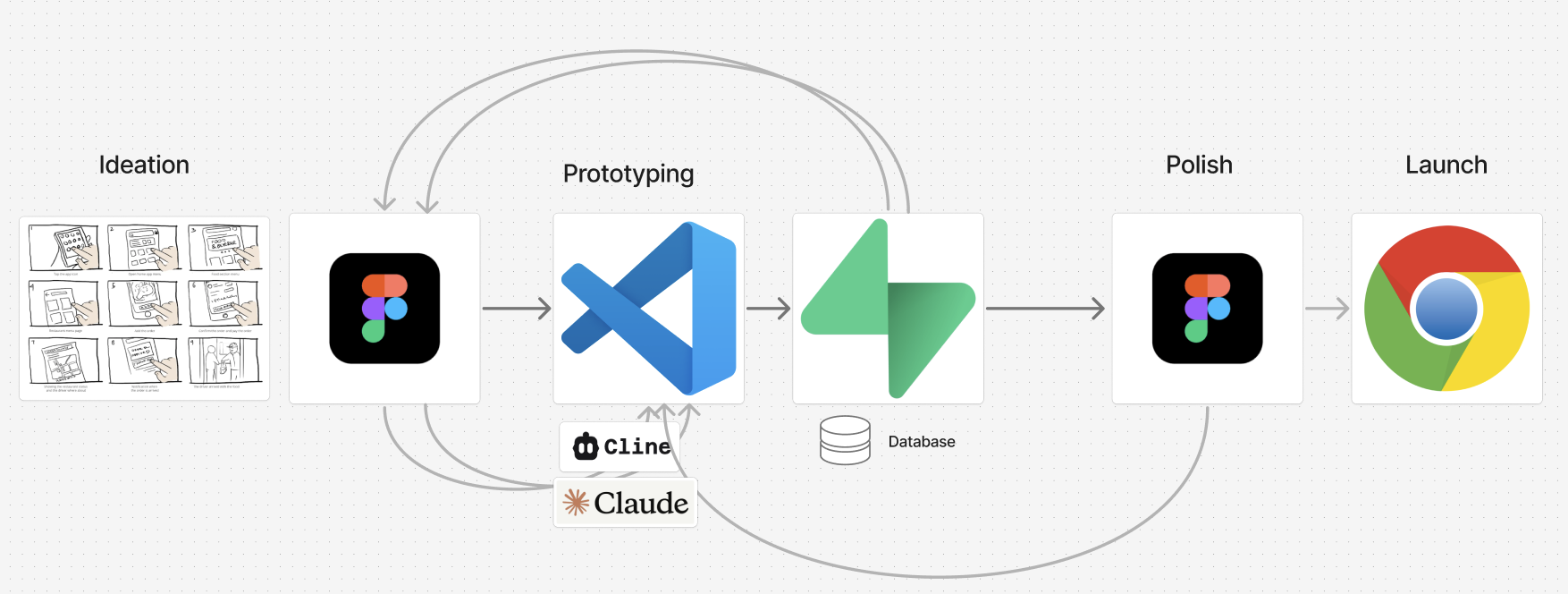
Refining the UI
I document the user problem, business needs, and scope before sketching the information architecture. Claude Code helps build the initial skeleton so I can test onboarding, messaging, and filtering early. Then I refine the interface beyond default AI-generated styling into a consistent design system.
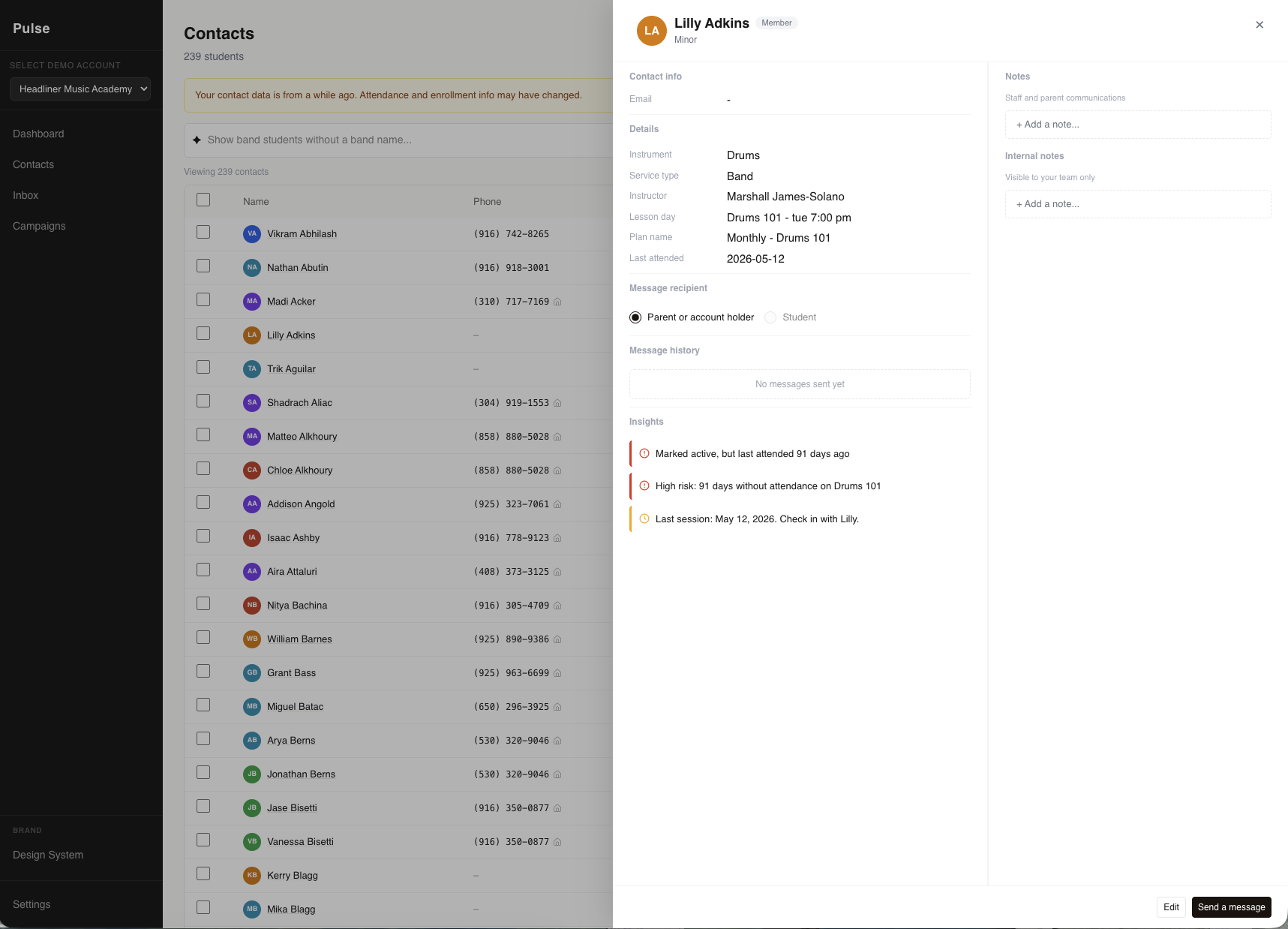
Early version. The first Claude version. Functional, but it screams vibecoded.
Key Features
- Daily insights
Hey Cohen surfaces risks, milestones, and opportunities worth a staff member's attention, grounded in real attendance, billing, and teacher notes.
A priority feed that turns attendance, billing, and notes into visible follow-up moments.
- Natural language search
Target the audience using any combination of filters that helps narrow them down. Or just describe them in plain language, and Hey, Cohen turns that into a recipient list.
Target the audience using any combination of filters that helps narrow them down. Or just describe them in plain language, and Hey, Cohen turns that into a recipient list.
- Human-in-the-loop
A human drafts the text message. Hey, Cohen helps polish it using business context and brand voice preferences, but staff retain control over what gets sent.
A human drafts the text message. Hey, Cohen helps polish it, adds context, and suggests improvements, but it's still the sender's call.
- Data reconciliation
Many class management software systems don't freely open an API. Bringing business data into Hey, Cohen meant establishing a framework for spreadsheet import and value reconciliation, then turning that data into something the rest of the product could actually work with.
- Inbox & campaigns
Every message sent becomes a direct communication path: traceable, attributable, and built for action instead of getting lost in personal texts or missed calls.
Every message sent becomes a direct communication path: traceable, attributable, and built for action instead of getting lost in personal texts or missed calls.
Custom-made CRM
This wasn’t part of the original plan, but our business needed a better way to track leads and connect them to the display campaigns that brought them in. I built a CRM that gives admins and teachers one place to book tours, manage follow-ups, send quotes, and handle upgrades. Instead of piecing together the next step from messages and memory, staff can see where each lead stands and act on it.
Lead prioritization
Lead details and communication
Our goal by October 1 was to stop relying on handwritten notes and analog workarounds. I built shared sticky notes as the first step. Anyone can drop a note, mention a colleague, reply, and choose who can see it. It keeps the simplicity of a reminder on the desk, but adds the conversation and visibility we need to follow through as a team.
Shared notes workspace
Replies and conversations
*Based on 278 students enrolled in May and 202 during the summer session (76 not re-enrolled); 52 of those 76 returned by August 15 after targeted campaigns sent by instructors through Hey, Cohen. September re-enrollment is still open, so this number may continue to move. Tuition estimate based on a $40 30-minute lesson rate and 4–5 prepaid sessions/month. Labor savings based on a $26/hr admin rate — one campaign (band recruitment) took 4–5 hours of manual audience curation, reduced to about 10 minutes in Hey, Cohen.